Indian Craftsmanship
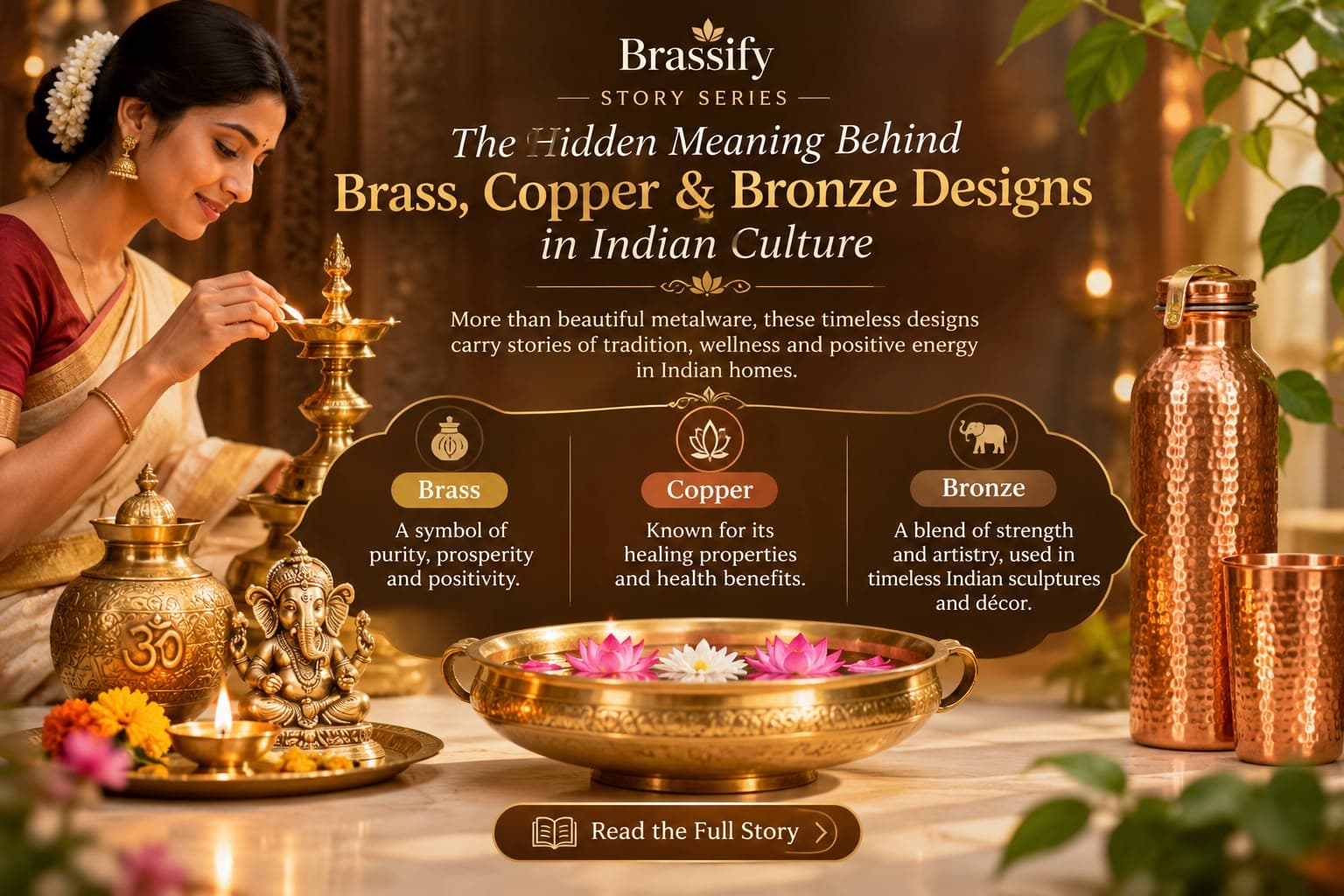
The Hidden Meaning Behind Brass, Copper and Bronze Designs in Indian Culture
Discover the hidden meanings behind traditional brass, copper and bronze designs in Indian culture. Explore beautiful patterns, heritage craftsmanship and the traditions that make Indian metalware special.
The Hidden Meaning Behind Brass, Copper and Bronze Designs in Indian Culture
India has a beautiful tradition of celebrating life through art, craftsmanship and everyday objects. From the diya placed in front of a home temple to the traditional brass utensils used in Indian kitchens, metal objects have always held a special place in Indian households.
But have you ever wondered why traditional Indian metalware features so many beautiful patterns, floral carvings, engraved lines and symbolic shapes?
These designs are not always added just to make an object look attractive. Many of them reflect Indian traditions, beliefs, cultural values and the artistic skills passed down through generations.
Brass, copper and bronze are three metals that have been part of Indian life for centuries. Each has its own appearance, traditional uses and cultural significance. Their designs often tell stories about celebrations, spirituality, nature and the importance of family traditions.
Let's explore the meaning behind these beautiful metal designs and understand why they continue to be loved in modern Indian homes.
1. Brass: A Symbol of Tradition, Warmth and Celebration
Brass has a special place in Indian culture. Its warm golden appearance makes it a popular choice for pooja items, decorative pieces, kitchenware and festive gifts.
In many Indian households, brass diyas, bells, kalash and pooja thalis are used during daily prayers and special occasions. These objects are often carefully decorated with traditional patterns that give them a distinctive appearance.
The Meaning Behind Brass Designs- Floral Patterns: Flowers are closely associated with beauty, purity and devotion in Indian traditions. Lotus-inspired designs, in particular, are commonly seen on traditional brass items.
- Peacock Motifs: The peacock is an important symbol in Indian art and is often associated with beauty, grace and cultural heritage.
- Bell Designs: Traditional brass bells are commonly used during pooja ceremonies. Their presence represents an important part of the prayer experience.
- Engraved Borders: Decorative lines and detailed borders reflect the patience, creativity and craftsmanship of traditional artisans.
Brass is also loved for its versatility. A beautifully designed brass diya can become part of a family's daily prayer routine, while a brass bowl or decorative vase can add a traditional touch to a living space.
2. Copper: A Connection with Nature and Traditional Living
Copper has been used in Indian households for generations. It is commonly found in traditional water vessels, lotas, kalash, glasses and decorative objects.
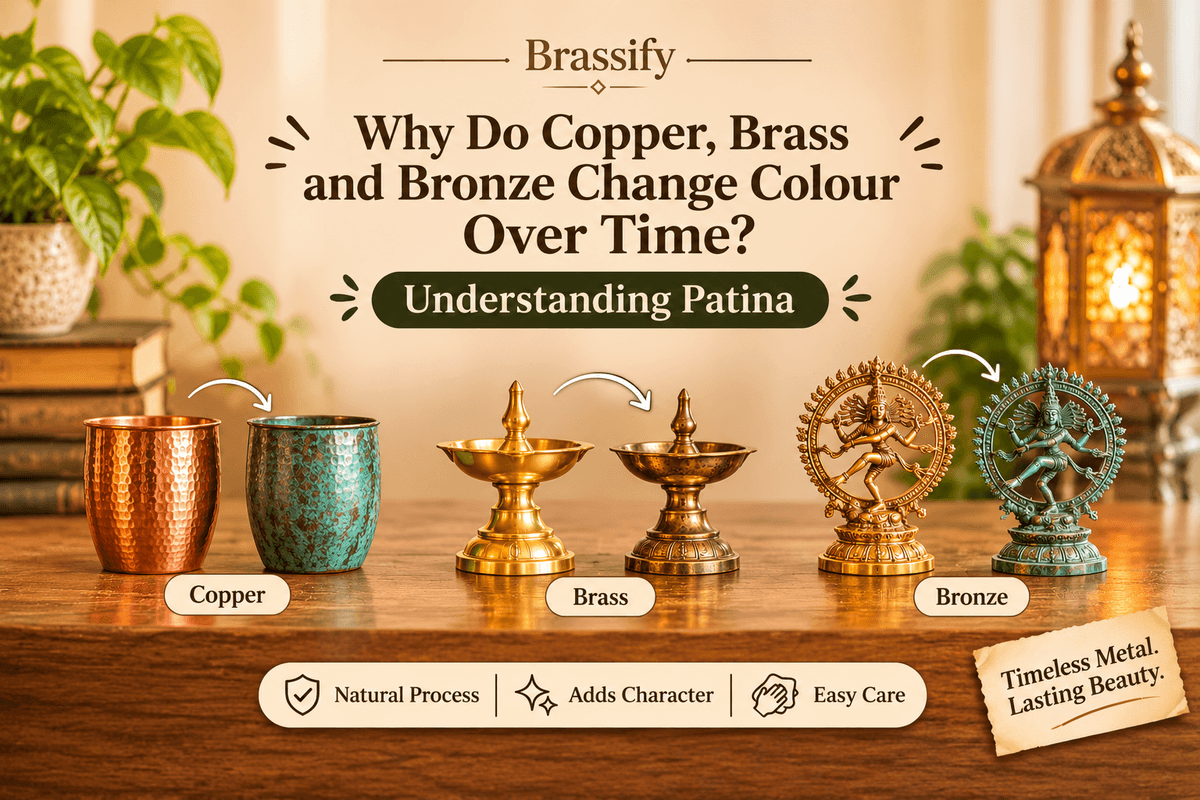
Its reddish-brown shine gives copper a different character from the golden appearance of brass. Over time, copper develops a natural patina, which many people appreciate for its aged and traditional look.
The Meaning Behind Copper Designs- Simple Geometric Patterns: Repeated lines, circles and geometric shapes reflect balance, symmetry and thoughtful craftsmanship.
- Traditional Engraving: Hand-engraved details make each piece visually interesting and showcase the skill of the artisan.
- Nature-Inspired Motifs: Leaf and floral patterns represent the connection between Indian traditions and the natural world.
- Traditional Vessel Shapes: The rounded forms of copper lotas and kalash are deeply connected with Indian household customs and religious ceremonies.
Copper is also traditionally associated with Ayurveda and Indian wellness practices. Copper vessels have been used in traditional households for storing water, although any health claims about copper should be considered separately and not assumed from tradition alone.
Today, copper products are appreciated not only for their traditional connection but also for their distinctive appearance and timeless appeal.
3. Bronze: The Beauty of Heritage and Timeless Craftsmanship
Bronze has a long history in Indian art and craftsmanship. It has been used to create traditional sculptures, religious objects, utensils and decorative pieces.
One of the most remarkable examples of Indian bronze craftsmanship can be seen in traditional South Indian metal sculptures. These pieces are admired for their detailed work, balanced proportions and artistic beauty.
The Meaning Behind Bronze Designs- Traditional Sculptures: Bronze sculptures often represent religious stories, cultural traditions and artistic expressions.
- Detailed Carvings: Intricate patterns reflect the experience and dedication of skilled metalworkers.
- Antique Finishes: Darker and aged-looking finishes give bronze objects a distinctive heritage-inspired appearance.
- Balanced Shapes: Symmetrical designs are often used to create a sense of harmony and visual balance.
Bronze is particularly appreciated by collectors and people who love traditional Indian art. Its rich appearance makes it suitable for decorative pieces that bring a sense of history and character into a home.
4. Why Do Traditional Indian Metal Designs Include Flowers, Leaves and Geometric Patterns?
One interesting thing about Indian metal craftsmanship is the variety of patterns used by artisans.
These patterns are often inspired by nature, architecture, spirituality and everyday life.
Here are some commonly seen design elements:
- Lotus Designs
- Leaf and Floral Patterns
- Paisley Patterns
- Peacock Designs
- Geometric Patterns
- For Your Living Room: Add a brass flower vase, decorative bowl or bronze-inspired accent piece to create a warm focal point.
- For Your Home Temple: Choose traditional brass diyas, bells and pooja thalis for a timeless devotional setting.
- For Your Dining Area: Decorative brass bowls and selected metal serveware can bring an elegant traditional touch to your table.
- For Festive Decoration: Use brass diyas and decorative accessories to make celebrations feel more special.
- For Thoughtful Gifting: Traditional metalware makes a meaningful gift for weddings, housewarmings, festivals and family occasions.
- You love warm golden finishes.
- You want traditional pooja essentials.
- You prefer decorative pieces with intricate engravings.
- You want metal accents that complement festive and traditional interiors.
- You like natural reddish-brown tones.
- You appreciate traditional vessels and simple designs.
- You prefer products with a distinctive, earthy appearance.
- You enjoy the natural ageing and patina of copper.
- You appreciate heritage-inspired designs.
- You love traditional sculptures and artistic objects.
- You prefer deeper, antique-looking finishes.
- You want decorative pieces with a timeless character.
The lotus is widely associated with purity, beauty and spiritual growth in Indian traditions. Its shape is frequently used in pooja thalis, diyas, decorative bowls and traditional metal artwork.
Flowers and leaves represent nature, freshness and beauty. These designs make traditional metalware look elegant without making it overly complicated.
Paisley, also known as the mango-inspired motif, is commonly found in Indian textiles, jewellery and decorative artwork. It adds a traditional and artistic touch to metal products.
The peacock is one of the most recognised motifs in Indian decorative art. Its detailed feathers and graceful appearance make it a favourite choice for traditional engravings.
Circles, repeated lines and symmetrical shapes are commonly used in traditional craftsmanship. They create an organised and balanced appearance.
Each design brings its own character to a metal object, making even simple household items feel special.
5. The Cultural Importance of Brass, Copper and Bronze in Indian Festivals
Indian festivals are closely connected with family traditions, celebrations and rituals. Metal objects often become an important part of these occasions.
During Diwali, brass and bronze diyas are used to decorate homes and create a warm festive atmosphere.
During weddings and religious ceremonies, traditional kalash, thalis and lotas are commonly used as part of family customs.
During daily pooja, many households use brass bells, diyas and other traditional utensils.
These objects are not simply decorative items. They often become part of family memories.
A brass diya used by a grandmother may later be passed on to her children or grandchildren. A traditional copper vessel may remind someone of their childhood home and family customs.
This emotional connection is one of the reasons traditional metalware continues to hold importance even as modern lifestyles change.
6. Handmade Designs: The Art and Effort Behind Every Detail
Behind every beautifully crafted metal product is a process that requires knowledge, patience and skill.
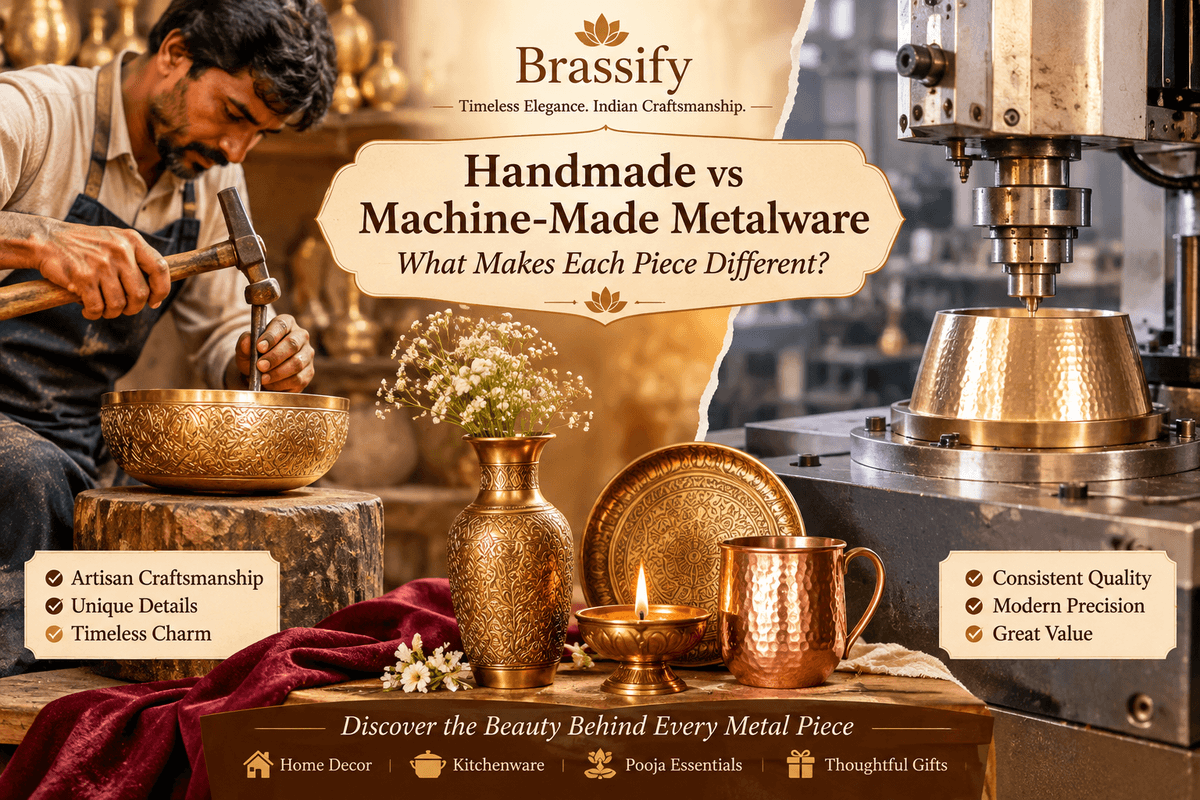
Moradabad, popularly known as India's Brass City or Pital Nagri, is especially recognised for its metalware industry and traditional craftsmanship.
Artisans working in this region create a wide range of products, including brass decorative items, engraved bowls, pooja essentials, copper vessels and artistic home accessories.
Depending on the product and production method, the process may involve shaping, casting, engraving, polishing and finishing.
Small details such as a carved border, textured surface or floral pattern can make a significant difference to the final appearance.
This is what makes traditional metal craftsmanship so interesting. Every design reflects a combination of artistic creativity and practical experience.
7. How to Choose Traditional Metal Designs for a Modern Home
Traditional metalware does not have to be limited to traditional interiors. Brass, copper and bronze products can look equally beautiful in contemporary homes.
Here are a few simple ways to include them in your space:
The best part is that you do not need to fill your entire home with traditional objects. Even one thoughtfully selected metal piece can add character to a space.
8. Brass, Copper or Bronze: Which One Should You Choose?
Each metal has its own look and traditional appeal. The right choice depends on your personal taste, intended use and home décor style.
Choose Brass If:Remember that the finish, care requirements and suitability for food contact can vary between products. Always check the material and intended use before purchasing.
9. Why Traditional Metalware Never Goes Out of Style
Trends in home decoration change every year. New colours, materials and designs become popular, but traditional metalware continues to find its place in Indian homes.
The reason is simple: these products connect beauty with memories and culture.
A brass diya is not just a decorative object. For many families, it represents a familiar part of their daily traditions.
A copper vessel can remind someone of the customs followed in their childhood home.
A bronze decorative piece can bring the beauty of traditional Indian craftsmanship into a modern living space.
These connections give metalware a value that goes beyond its appearance.
When people choose traditional metal products, they are often choosing something that reflects their personal taste, family traditions and appreciation for Indian craftsmanship.
Bringing Indian Craftsmanship into Everyday Life with Brassify
At Brassify, we believe traditional metalware deserves a special place in modern homes.
Our collection brings together the beauty of brass, copper and bronze-inspired craftsmanship through products designed for pooja, home décor, kitchenware and thoughtful gifting.
Inspired by the rich metalworking heritage of Moradabad, Brassify celebrates the artistic details and traditional appeal that make Indian metalware special.
Whether you are looking for a beautifully designed brass diya, a traditional copper vessel, an elegant decorative bowl or a meaningful gift, every choice can bring a little more tradition into your everyday life.
Because sometimes, the most beautiful things in our homes are not just objects. They are reminders of where we come from, the traditions we follow and the memories we create.
Brassify – Bring Home a Little Tradition.